

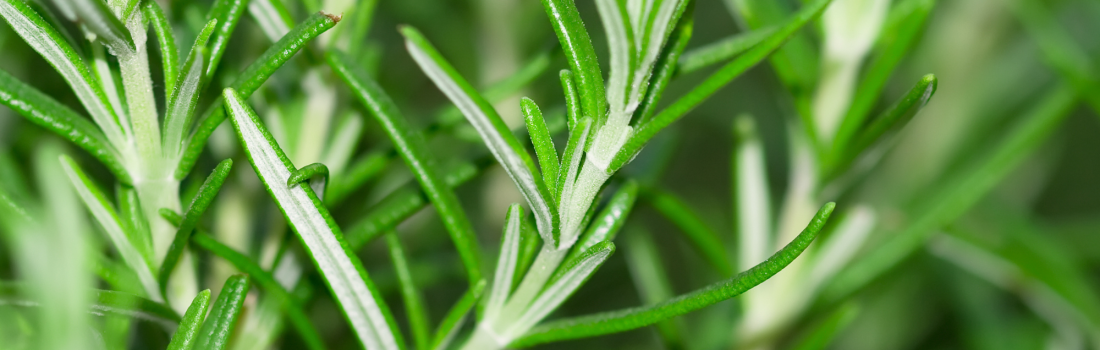
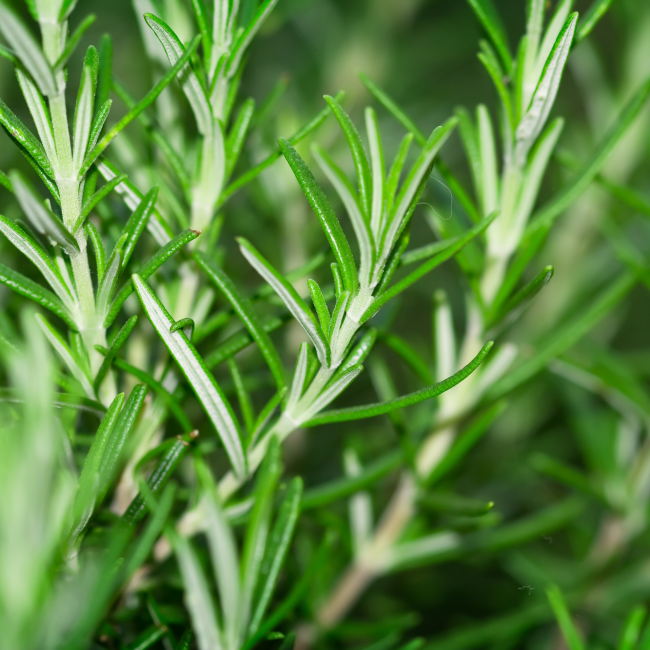
Having trouble remembering where the car keys are? Grab a sprig of rosemary. It has a reputation for improving memory. Like most herbs, this Mediterranean native has a rich history in folklore. In the Middle Ages rosemary was used to protect against evil spirits. If placed beneath your pillow, it would ward off bad dreams. Today, rosemary symbolizes love and remembrance. Traditionally, sprigs are scattered on the grave of beloved family members to show that they will not be forgotten.
Wild rosemary can be found growing along the coast of Italy, Greece, Spain and France. Its fondness for the seaside played a role in the herb’s name, which comes from the Latin words ros (dew) and marinus (sea) or “Dew of the Sea”.
A perennial evergreen in warmer regions, here in the Midwest we treat rosemary as a tender perennial as it cannot survive our winters outdoors. While it can be grown from seed, it is best propagated by stem cuttings or grown from a seedling. Seeds germinate very slowly, and germination rates can be low. If you start a plant from seed, sow the seeds indoors 8 to 12 weeks before the last frost of spring.
Rosemary does not transplant well so I like to grow it in a pot and bring it indoors for the winter. To keep this fragrant herb happy indoors, place in a cool, sunny location where the relative humidity is high.
Depending on the variety, rosemary can be an upright shrub or a creeping plant. Both are used for cooking. Rosemary has a distinctive sharp flavor. It can be used fresh or dried and when properly preserved it will retain much of its flavor and fragrance. Harvest leaves just before use. Keep in mind that the flavor of rosemary often gains strength the longer a dish cooks.
For more information on rosemary, see the UW Madison Division of Extension article, Rosemary, Rosemarinus officinalis.