


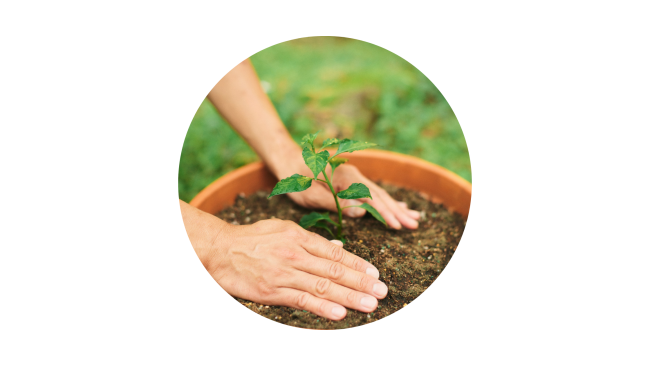
As we move forward into a new planting season, there are several steps gardeners can take to make their gardens more sustainable. The definition of sustainable landscaping can vary but generally speaking, it means to use resources in a way that will meet our needs today while preserving environmental health and resources for future generations. A sustainable garden not only conserves on environmental impacts but can also save us time, labor and money.
Long-term planning for a sustainable landscape includes creating a design that is attractive, functional, cost efficient, environmentally friendly and maintainable. However, there are things we can do in the short term to meet some of those objectives. When planning your garden beds, consider what can be done to promote total plant health and reduce the need for inputs such as fertilizers, water and pest controls.
The first step is to keep our soil healthy. If your soil is healthy, your plants will get off to a good start and be more resilient to environmental stress or disease. Research links many plant problems to poor soil. Soil is made from both organic and inorganic materials. It also is teeming with life. Healthy soil contains billions of microorganisms that are responsible for breaking down the remains of plants and animals. This decomposition is necessary in order to release energy and nutrients back into the ground. Almost all soils can benefit from the addition of organic matter. Organic matter feeds those microorganisms that work so hard in your garden. It also improves the water and nutrient-holding capability of the soil. Sources for organic matter include compost, grass-clippings (untreated with herbicides), shredded leaves, or well-aged manure.
While adding organic matter can improve the richness of the soil, it may not provide all the necessary nutrients for your plants. You may still need to add additional amendments to give the plants a well-balanced diet; although, healthy soils often need less fertilizer. To determine the fertility needs of your soil, it’s recommended to get a soil test. That way, you know not only whether amendments are needed, but also which nutrients are required and in what amounts. To learn more about garden soil testing, visit the UW Soil and Forage Lab website.
Knowing your soil helps you decide which plants will thrive in your garden. Other factors to consider include soil texture, which affects drainage, aeration, and workability, and soil pH, which influences nutrient availability. Putting the right plant in the right place helps prevent stress and reduces susceptibility to pests and other issues.
Water usage is another area where we can incorporate good conservation habits. Choose plants with low-water requirements such as native species. Plants well adapted to the local environment typically require only minimal watering / care once established.
Wait until plants need watering then water deeply and avoid watering too frequently. Group together plants with similar watering needs to make it easier to water plants only when necessary. Use mulch to help hold soil moisture and reduce evaporation. Water your garden beds in the early morning instead of mid-day when much of the water is lost to evaporation. Try not to water in the evening since this can encourage disease. Use soaker hoses or drip irrigation as this is more efficient than sprinklers. To learn more, see best practices for watering yard and gardens.
Lastly, when it comes to pest management, follow the old adage popularized by Ben Franklin ‘An ounce of prevention is worth a pound of cure’. Pest prevention involves doing what you can to keep plants healthy and vigorous. Healthy plants have less risk of developing pest problems. Again, healthy soils and the right plant in the right place can help reduce pest issues as can selecting insect and disease resistant plant varieties.
Use barriers such as fences or row covers to exclude pests from access to your plants. Remove diseased plant material and pull weeds before they go to seed to thwart the spread of problems. Also, plant a diverse garden. That way if a pest problem does arise, hopefully, the whole garden bed won’t be in jeopardy. Always inspect plants for disease or insect infestation before purchasing. If a problem does develop, get a correct diagnosis before treating. It may be that treatment is not necessary or can be done without chemical inputs. It could turn out that the weird looking bug you found is actually beneficial to the garden. If pesticides are needed, always read and follow the product label. Avoid overuse and treat just the target area. For more information, check out Manage Yard & Garden Problems Wisely and Preventing pests in your yard and garden.
Sustainable gardening involves finding a balance between inputs and outcomes. As with balancing most things in life, it is probably best to view this as an on-going process.