

It appears that spring has finally arrived and we are now enjoying the spectacular color and aroma of many spring-flowering shrubs. I wait patiently through the months to experience the intense, orange fragrance of my mock orange shrub when it blooms this time of year. However, that scent also reminds me that it is time to think about pruning.
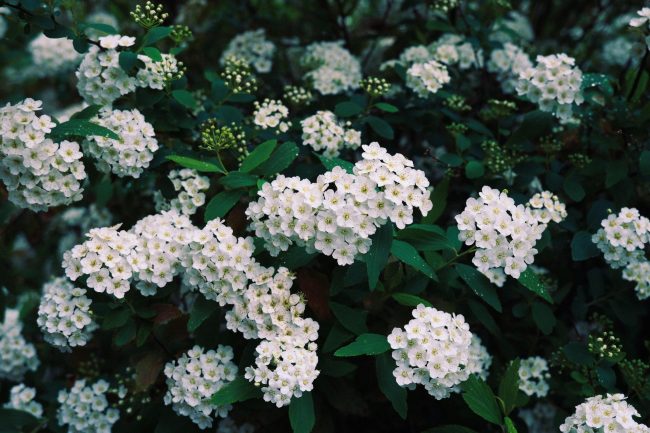
Many spring-blooming shrubs are best pruned just after flowering. Shrubs that bloom in early spring set their buds on the previous year’s growth. Pruning soon after they finish flowering allows time for vigorous growth during the summer, which provides flower buds for the following year. Shrubs that fall into this group include lilac, forsythia, weigela, viburnum, redtwig dogwood and spring-blooming spirea.
So why do we need to prune flowering shrubs? In addition to maintaining a shrub’s natural shape, pruning can improve the quality of flowers, fruit, or foliage. Proper pruning allows for better air movement and light penetration, which helps to reduce pest problems. Size control is another reason to prune; however, if this becomes a recurring need, it may be best to find a plant better suited to the location.
Pruning should be done on established, healthy shrubs. Avoid pruning plants that may be stressed due to recent transplanting or insect and disease problems. Dead or diseased branches, however, can be removed at any time. Keep in mind that certain diseases can be transmitted from an infected plant to a healthy plant by your pruning tools, so it is good practice to disinfect tools between before moving on to the next shrub. To sanitize your tools, treat them for at least 30 seconds with 70% alcohol (e.g, rubbing alcohol or spray disinfectants) or a 10% bleach solution. If you use bleach, be sure to rinse tools thoroughly afterward and lightly oil them to prevent rust.
When pruning shrubs, there are two basic types of cuts: heading back and thinning. Heading back involves cutting a branch back to a bud or larger branch. It is used to shorten a branch or stem to reduce its overall length or height. It is a way to make things smaller.
Thinning, on the other hand, removes larger stems and is often used to prune interior branches back to the base of the plant or to the point of origin. Never remove more than one-third of the largest branches at one time.
Shrubs that produce multiple stems from the crown (suckering shrubs) benefit from regular thinning, as it helps maintain young growth and encourages good flower production. It also preserves the plant’s natural shape.
For older or overgrown shrubs that have not been regularly thinned, renewal pruning may be beneficial. This method is typically done annually, with the goal of removing approximately one-third of the oldest, largest-diameter stems down to the ground each year. By the end of the third year, the plant will be fully renewed. Once the shrub is “renewed”, resume standard pruning as needed.
Another pruning method for overgrown or neglected multi-stemmed shrubs is rejuvenation pruning. This involves cutting all stems down to the ground. I “rejuvenated” a few of my spirea plants two years ago. At first, I was paralyzed with fear at what I had done—the result looked drastic, to say the least. However, the shrubs recovered well and now appear full and healthy.
As mentioned, pruning spring-flowering shrubs generally takes place right after flowering has finished, whereas rejuvenation pruning is done when the shrub is dormant. Keep in mind that not all shrubs respond well to this method, and buds set for the current year’s blooms will be sacrificed.
Before pruning, it is important to understand the best technique for your particular shrub. Many have specific guidelines regarding timing and method. For additional information, refer to the UW Madsion Extension fact sheet, Pruning Deciduous Shrubs and UMN Extension fact sheet, Pruning trees and shrubs.